


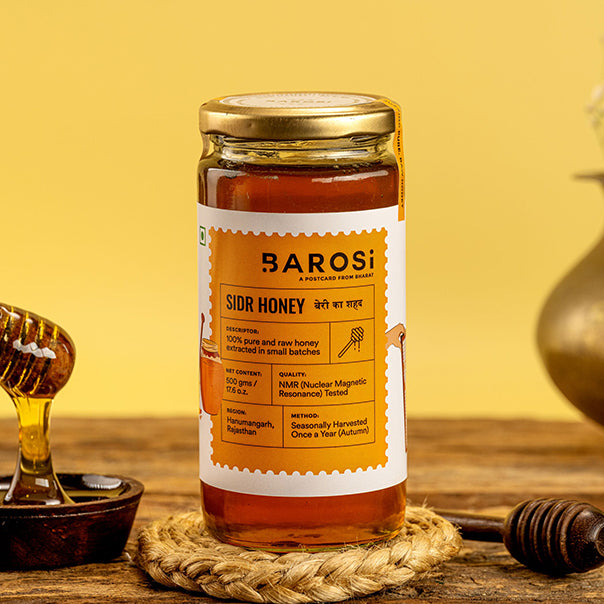
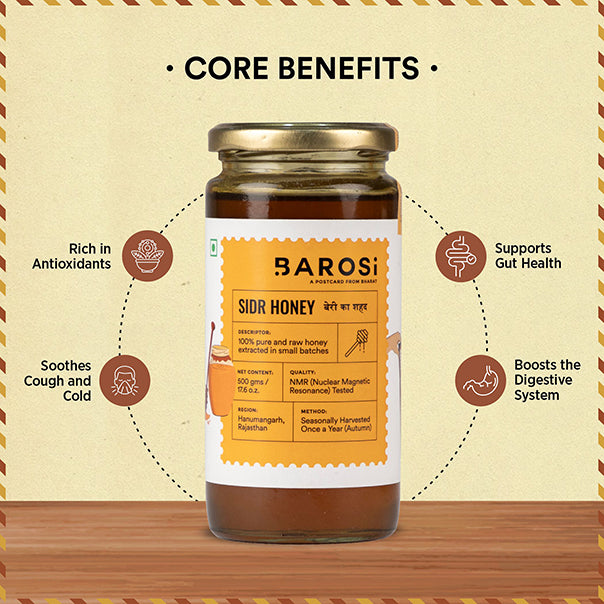
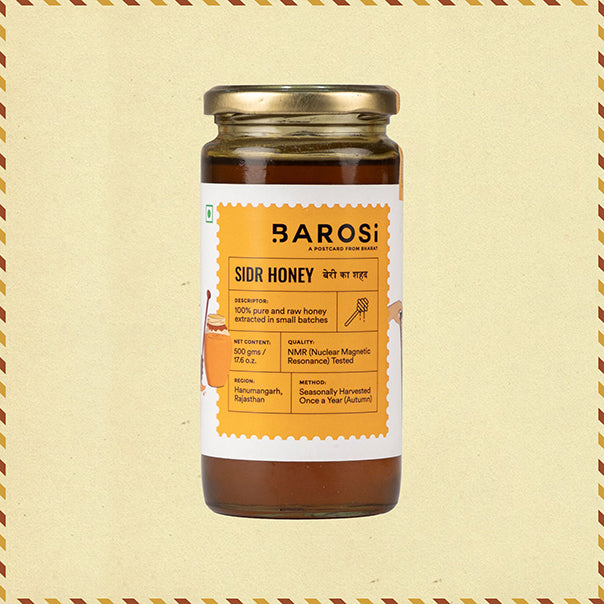
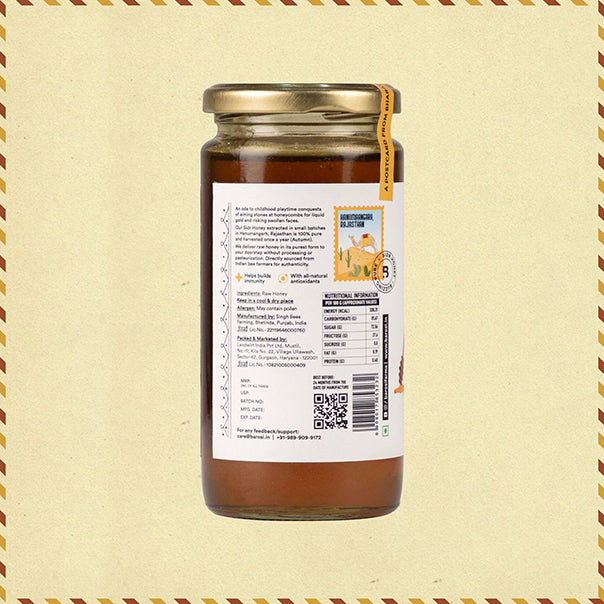
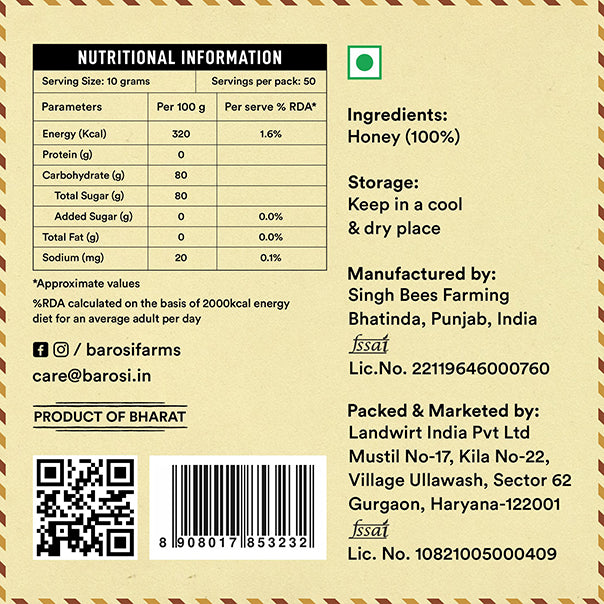

Sidr Honey
121+ bought in past week

₹ 369
Regular price35% Off
Couldn't load pickup availability

Explore More Products



A Postcard from Bharat
Life here moves at its own sweet pace. We find joy in sitting under the neem tree, sharing stories and laughter. We stretch out on the khaat, soaking in the warm sun. We enjoy eating rotis fresh off the chulha, paired with chutneys ground on the sil-batta. Our big glass of chach or lassi keeps us refreshed and full of life. This is us. This is life in Bharat; simple and joyful.
Frequently Ask Question

Sidr honey is honey made from the nectar of sidr tree flowers. Sidr trees belong to the Ziziphus genus. Ours is raw honey, harvested once a year in autumn and filtered only for impurities at the farm.
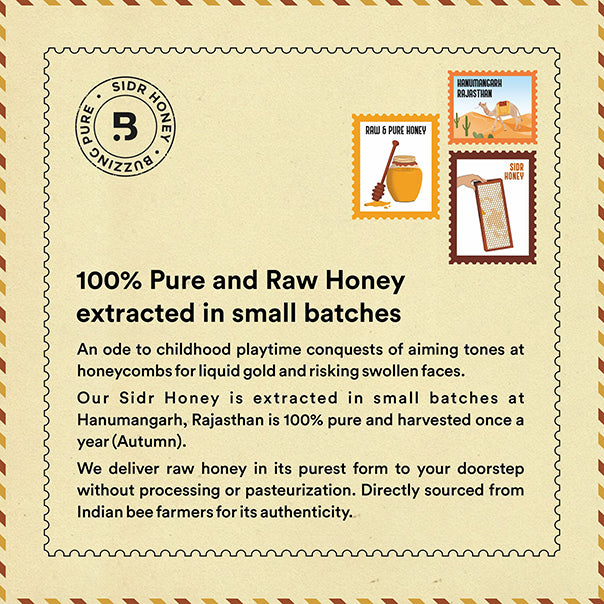
Sidr honey comes from bees that forage near flowering sidr trees. We source ours directly from bee farmers, and the honey is extracted in small batches once a year, in autumn, under our supervision. Because the harvest depends on a single flowering season, sidr honey is gathered far less often than multifloral honey.
The sidr honey price reflects how it is harvested. Sidr honey depends on one tree's flowering season and is collected once a year, while multifloral honey is harvested twice a year from many different flowers. The current price is shown on the product page.
Crystallisation is a natural process in which the glucose in honey separates out of the liquid, and it does not mean the honey has spoiled. You can eat it in its crystallised form, or place the jar in warm water and stir until the crystals dissolve. Avoid boiling or scorching the honey.
No. Honey should not be given to infants under 12 months of age, because it can carry spores that cause infant botulism, a rare but serious illness in young babies.